

Introduction
Home improvement tax deduction rules can be confusing because most repairs and renovations are not automatically deductible on a federal tax return. However, certain improvements may provide tax benefits through specific credits, medical-expense rules, business-use provisions, or an increase in your home’s tax basis.
For many homeowners, the biggest tax benefit does not happen when the improvement is installed. Instead, a qualifying capital improvement may increase the property’s adjusted basis, which can potentially reduce taxable gain when the home is eventually sold.
This guide explains how the home improvement tax deduction works in the United States, which projects generally qualify for tax treatment, when an improvement may qualify for a credit instead of a deduction, how medical and business-related improvements differ, and which records you should keep.
What Is a Home Improvement Tax Deduction?
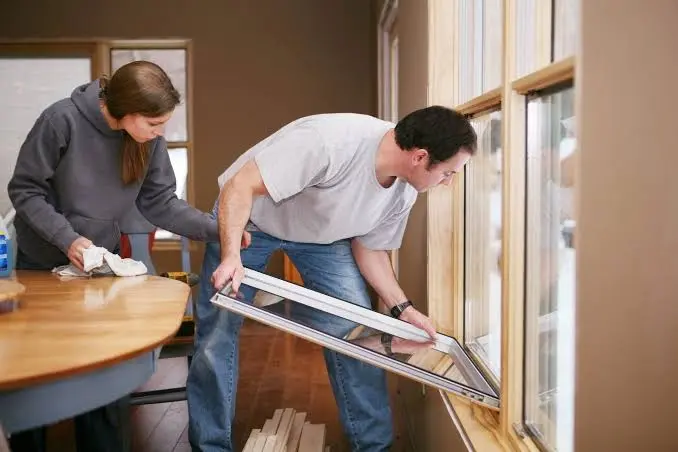
A home improvement tax deduction generally refers to a tax benefit associated with money spent improving a home. However, there is no broad federal deduction that lets homeowners simply deduct the cost of ordinary home renovations from taxable income.
Instead, the tax treatment depends on the purpose and type of improvement.
A qualifying home improvement may:
- Increase your home’s adjusted tax basis.
- Qualify for a specific federal tax credit.
- Qualify partly as a medical expense when its primary purpose is medical care.
- Be treated differently when the home is used for business.
- Potentially receive different treatment under state or local tax rules.
The IRS generally considers an improvement to be a project that adds value, prolongs the property’s useful life, or adapts it to a new use. Costs of qualifying improvements can generally be added to the home’s basis.
Are Home Improvements Tax Deductible?
Usually, no. Ordinary home improvements and maintenance expenses are generally not immediately deductible on a federal personal income tax return.
For example, painting a bedroom, repairing a leaking faucet, or replacing broken hardware normally does not create an immediate federal deduction for a homeowner.
However, an improvement can still have tax value.
Capital Improvements Can Increase Your Tax Basis
A capital improvement generally becomes part of your home’s adjusted basis when it meets the applicable IRS requirements.
The IRS gives examples such as:
- Adding a bedroom or bathroom
- Building a garage, deck, patio, or porch
- Installing a new roof
- Installing central air conditioning
- Replacing or upgrading plumbing
- Installing insulation
- Major kitchen modernization
- Installing certain built-in appliances
- Landscaping and certain permanent outdoor improvements
- Installing a new heating system
These improvements can increase the property’s basis when they remain part of the home.
Why Does Tax Basis Matter?
Your adjusted basis is important when you sell your home.
A simplified calculation is:
Sale price − selling expenses − adjusted basis = potential taxable gain
Increasing your adjusted basis through qualifying improvements can therefore reduce the amount of gain that may be subject to tax.
For example, suppose you purchased a home for $350,000 and later spent $50,000 on qualifying capital improvements that remain part of the property. Ignoring other adjustments for simplicity, the basis could become $400,000.
If you later sell the property, that higher basis may reduce your calculated gain.
The actual calculation can be more complicated because selling expenses, previous adjustments, depreciation, casualty losses, and home-sale exclusions can also affect the result.
Home Improvements That Usually Do Not Qualify for an Immediate Deduction
Many common household expenses are considered repairs or maintenance rather than capital improvements.
Examples can include:
- Interior or exterior painting
- Fixing small leaks
- Patching holes or cracks
- Replacing broken hardware
- Routine maintenance
- Minor repairs
- General cleaning and upkeep
The IRS specifically notes that ordinary repairs and maintenance that do not add value or prolong the home’s useful life generally cannot be added to the home’s basis.
That does not mean every repair is permanently irrelevant for tax purposes. A repair-type expense can sometimes be treated as part of a larger qualifying remodeling or restoration project.
Example: Repair vs. Improvement
Replacing one broken windowpane is generally a repair.
Replacing all the windows as part of a larger home improvement project may qualify as an improvement under the IRS’s basis rules.
The distinction depends on the facts and the overall project.
Home Improvement Tax Credit vs. Tax Deduction
A tax deduction reduces the amount of income subject to tax.
A tax credit generally reduces the tax itself.
This difference is important because homeowners often use the terms interchangeably.
For example, certain energy-related improvements historically qualified for the federal Energy Efficient Home Improvement Credit rather than an ordinary home improvement deduction. Under the rules applicable to 2023–2025, qualifying expenses could receive a credit generally equal to 30% of eligible costs, subject to annual limits.
However, the federal Energy Efficient Home Improvement Credit is not available for property placed in service after December 31, 2025 under current IRS guidance.
This is especially important for homeowners planning projects in 2026 and later: do not assume that a federal energy tax credit available in a previous year is still available for a new project.
Which Energy-Efficient Improvements Previously Qualified?
For qualifying improvements installed during the applicable credit period, the federal Energy Efficient Home Improvement Credit covered certain products and projects, including:
- Exterior doors
- Certain windows and skylights
- Insulation and air sealing
- Certain central air conditioners
- Certain water heaters
- Certain furnaces and boilers
- Heat pumps
- Heat pump water heaters
- Certain biomass stoves and boilers
- Home energy audits
The exact requirements and dollar limits depended on the type of improvement.
For eligible energy property, labor could sometimes be included. However, labor for certain building-envelope improvements, such as qualifying windows, exterior doors, insulation, and air sealing, was not eligible for the credit.
Because these rules are date-sensitive, homeowners should verify the rules for the specific tax year before starting a project.
Can Home Improvements Be Deducted for Medical Reasons?
Sometimes. A home improvement may qualify as a medical expense when its main purpose is medical care for you, your spouse, or a dependent.
The IRS allows certain capital expenses for special equipment or home improvements when the primary purpose is medical care. However, if the improvement increases the value of the property, the amount treated as a medical expense can be reduced by the increase in the home’s value.
Examples of Potentially Medical Home Improvements
Depending on the circumstances, examples may include modifications such as:
- Installing accessibility equipment
- Modifying a bathroom for disability-related needs
- Installing special plumbing fixtures
- Making other structural changes necessary for medical reasons
For some disability-related improvements that do not normally increase the home’s value, the qualifying cost may potentially be treated as a medical expense in full.
Medical-expense deductions have additional requirements and limitations, so homeowners should not assume that every accessibility renovation automatically creates a deduction.
What About Home Improvements for a Home Office?
A home improvement connected to business use can have different tax treatment from an improvement made solely for personal use.
If part of your home qualifies for a legitimate business-use deduction, certain expenses may potentially be allocated between business and personal use under the applicable tax rules.
However, simply working from home does not automatically make every renovation deductible.
For example, repainting an entire personal residence is not automatically a business deduction just because you occasionally work from a home office.
Business-use tax rules can be complicated, particularly for self-employed taxpayers and homeowners who use part of their property for business. Professional tax advice may be appropriate when significant renovations are involved.
How to Track Home Improvements for Tax Purposes
Keeping accurate records is one of the most useful things a homeowner can do.
1. Keep Original Purchase Records
Save documents showing what you paid for the home, including relevant closing documents.
2. Save Improvement Receipts
Keep invoices, receipts, contracts, and proof of payment for major improvements.
3. Record the Date of the Project
Write down when the improvement was completed or placed in service.
4. Keep Contractor Information
Store contractor invoices, descriptions of work, permits, and other project documentation.
5. Keep Energy-Related Documentation
For qualifying energy projects from years in which a credit was available, keep applicable product certifications, manufacturer information, receipts, and installation records.
The IRS recommends retaining purchase receipts and installation records because documentation can be important if your return is audited and may also help establish the home’s adjusted basis when you eventually sell.
6. Maintain a Home Improvement File
A simple digital or physical folder can include:
- Receipts
- Contractor agreements
- Building permits
- Before-and-after project descriptions
- Product information
- Invoices
- Proof of payment
- Tax credit documentation
- Records of insurance reimbursements
Good recordkeeping can make the tax calculation much easier years later.
How to Determine Whether Your Project Has Tax Benefits
Before assuming your renovation qualifies for a home improvement tax deduction, use this process.
Step 1: Identify the Purpose
Ask why you are making the improvement.
Is it:
- General maintenance?
- A major renovation?
- An addition?
- An energy upgrade?
- A medical modification?
- Related to business use?
- An improvement to prepare the property for sale?
The purpose can affect the tax treatment.
Step 2: Determine Whether It Is a Repair or Improvement
A routine repair is generally treated differently from a capital improvement.
Consider whether the project adds value, prolongs the property’s useful life, or adapts it to a new use.
Step 3: Check for a Specific Tax Credit
Do not assume that an improvement qualifies merely because it saves energy.
Check the IRS rules applicable to the year the property was placed in service.
Step 4: Calculate the Potential Basis Increase
For qualifying capital improvements, keep track of the amount that may be added to your home’s basis.
Step 5: Check State Tax Rules
Federal and state rules are not necessarily identical. Some states may offer incentives for energy efficiency, renewable energy, or other home improvements.
Step 6: Keep Documentation
Save your records even if you do not receive an immediate tax benefit. The documents may become valuable when you sell the property.Home improvement tax deduction can help homeowners reduce their taxable income.
A Home improvement tax deduction may apply to certain qualifying renovation expenses.
Before claiming a Home improvement tax deduction, check the latest tax rules.
Keeping receipts can support your Home improvement tax deduction claim.
Energy-efficient upgrades may also qualify for a Home improvement tax deduction.
A professional can help you understand whether you qualify for a Home improvement tax deduction.
Common Home Improvement Tax Mistakes
Assuming Every Renovation Is Deductible
A new kitchen, bathroom renovation, or flooring project may improve your property substantially, but that does not automatically make the expense an immediate federal deduction.
Confusing Credits With Deductions
A tax credit and tax deduction work differently. Always identify which tax provision applies.
Ignoring the Home’s Basis
Some homeowners throw away renovation records because they cannot deduct the expense immediately. That can be a mistake because qualifying improvements may affect the property’s adjusted basis when it is sold.Home improvement tax deduction can help homeowners reduce their taxable income.
A Home improvement tax deduction may apply to certain qualifying renovation expenses.
Before claiming a Home improvement tax deduction, check the latest tax rules.
Keeping receipts can support your Home improvement tax deduction claim.
Energy-efficient upgrades may also qualify for a Home improvement tax deduction.
A professional can help you understand whether you qualify for a Home improvement tax deduction.
Using Outdated Energy Credit Information
Energy tax incentives can change because of legislation and IRS guidance. Information from an older article may not apply to a project placed in service in a later year.
Failing to Separate Repairs From Improvements
Keep detailed invoices that describe exactly what was completed. A vague invoice can make it harder to determine the proper tax treatment later.
Forgetting Reimbursements and Credits
Certain reimbursements, subsidies, insurance payments, or tax credits can affect the amount that ultimately belongs in your home’s basis.Home improvement tax deduction can help homeowners reduce their taxable income.
A Home improvement tax deduction may apply to certain qualifying renovation expenses.
Before claiming a Home improvement tax deduction, check the latest tax rules.
Keeping receipts can support your Home improvement tax deduction claim.
Energy-efficient upgrades may also qualify for a Home improvement tax deduction.
A professional can help you understand whether you qualify for a Home improvement tax deduction.
Practical Example of Home Improvement Tax Treatment
Imagine a homeowner buys a house for $400,000.
Several years later, the homeowner spends:
- $35,000 on a major kitchen renovation
- $20,000 on a new roof
- $3,000 on routine painting
- $1,500 repairing plumbing leaks
The homeowner should not automatically treat the entire $59,500 as an immediate tax deduction.
The major improvements may potentially increase the home’s tax basis if they meet the applicable IRS rules. Routine painting and ordinary leak repairs generally do not receive the same capital-improvement treatment.
This example demonstrates why keeping individual project records is important.
Benefits of Understanding Home Improvement Tax Rules
Knowing the rules before renovating can help you:
- Avoid claiming an improper deduction.
- Preserve documentation for future tax purposes.
- Identify potentially available tax credits.
- Track your home’s adjusted basis.
- Prepare more accurately for a future home sale.
- Ask better questions of your tax professional.
- Avoid relying on outdated tax information.
The goal is not to make every renovation “tax deductible.” The goal is to understand how each project is treated under the rules that apply to your situation.
Home GardeningYOUR KEYWORDhome decor ideasFrequently Asked Questions
1. Can I deduct home improvements on my federal taxes?
Generally, homeowners cannot immediately deduct ordinary personal home improvements from federal taxable income. However, qualifying improvements may increase the home’s adjusted basis, and certain projects may qualify for specific tax provisions such as medical or business-related deductions or tax credits when the applicable requirements are met.
2. Is a new roof tax deductible?
A new roof on a personal residence is generally not an immediate federal tax deduction simply because it is a home improvement. However, a qualifying roof replacement may be treated as a capital improvement that increases your home’s adjusted basis. Keeping the invoice and proof of payment can therefore be important for future tax calculations.
3. Does remodeling a kitchen increase my tax basis?
A substantial kitchen modernization can generally qualify as an improvement that increases the home’s basis when it meets IRS requirements and remains part of the property. The IRS specifically lists kitchen modernization among examples of improvements that can increase basis. Keep detailed records of the project costs and documentation.
4. Can accessibility improvements qualify for a tax deduction?
Potentially. Home improvements made primarily for medical care may qualify as medical expenses under certain circumstances. If an improvement increases the property’s value, the amount treated as a medical expense may be reduced by that increase in value. Special accessibility improvements that do not increase home value may receive different treatment.
5. Are energy-efficient home improvements still eligible for a federal tax credit?
The answer depends on when the property was placed in service. Under current IRS guidance, the Energy Efficient Home Improvement Credit applied to qualifying property placed in service through December 31, 2025, and is not available for property placed in service after that date. Always check current IRS guidance for the tax year involved.Home improvement tax deduction can help homeowners reduce their taxable income.
A Home improvement tax deduction may apply to certain qualifying renovation expenses.
Before claiming a Home improvement tax deduction, check the latest tax rules.
Keeping receipts can support your Home improvement tax deduction claim.
Energy-efficient upgrades may also qualify for a Home improvement tax deduction.
A professional can help you understand whether you qualify for a Home improvement tax deduction.
Conclusion
The home improvement tax deduction is not a single federal deduction available for every renovation. For most U.S. homeowners, ordinary personal improvements are not immediately deductible. Instead, qualifying capital improvements may increase the home’s adjusted basis, while certain projects can qualify for separate tax benefits under specific rules.
Energy improvements, medical modifications, business-use expenses, and capital improvements all have different requirements. The most practical approach is to identify the purpose of the project, determine whether it is a repair or improvement, check the tax rules for the year involved, and keep detailed records.
If you are planning a major renovation, start a dedicated home-improvement tax file before the work begins. Keep contracts, invoices, receipts, permits, product information, and proof of payment. When you eventually sell the property, those records may help you establish your adjusted basis and calculate your potential taxable gain.