
Balance in interior design is the principle that determines how visual weight is distributed across a room so no single area feels heavier, busier, or more dominant than another. This article explains what balance means in design, the different types you can use, practical examples for real rooms, common mistakes people make, and simple steps to apply balance in your own home.
Whether you are decorating a new apartment or refreshing a living room that feels “off” without knowing why, understanding balance will help you fix it.
What Is Balance in Interior Design?
Balance in interior design refers to the even distribution of visual weight among objects, colors, textures, and shapes in a space. It is one of the core principles of design, alongside rhythm, proportion, emphasis, and unity.
Visual weight does not mean physical weight. A large, plain white sofa can feel lighter than a small, dark, heavily patterned armchair. Balance is about how the eye perceives a room, not how much furniture actually weighs.
A well-balanced room feels calm and intentional. An unbalanced room feels lopsided, cluttered on one side, or strangely empty on the other, even if the furniture itself is high quality.
Why Balance Matters in a Balance in Interior Design
Balance matters because it directly affects how comfortable and put-together a space feels. Rooms without balance can feel chaotic even when every individual piece is beautiful.
Good balance helps a room:
- Feel calmer and easier to relax in
- Guide the eye naturally through the space
- Make furniture arrangements look intentional rather than accidental
- Prevent one corner or wall from overpowering the rest of the room
The 3 Main Types of Balance in Interior Design
There are three primary types of balance used in interior design: symmetrical, asymmetrical, and radial. Each creates a different mood and works better in certain rooms than others.
1. Symmetrical Balance
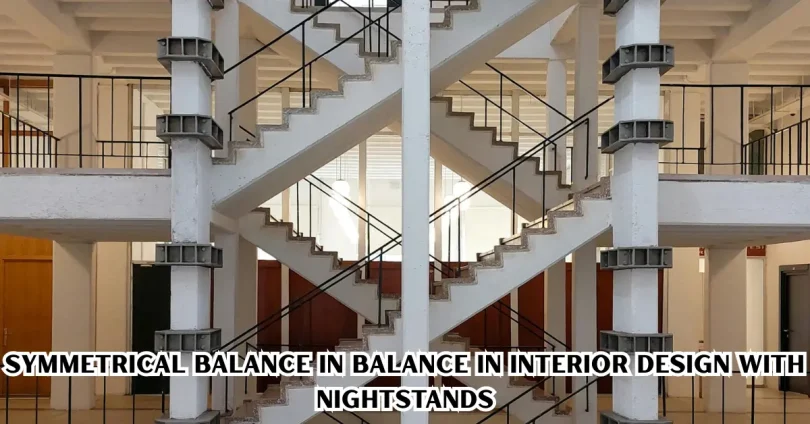
Symmetrical balance mirrors elements on either side of a central point or axis. Think of two identical nightstands and lamps on either side of a bed, or matching armchairs facing each other across a coffee table.
This type of balance feels formal, orderly, and traditional. It works especially well in:
- Bedrooms
- Dining rooms
- Formal living rooms
- Entryways with a clear focal point, such as a mirror or console table
The main limitation of symmetrical balance is that it can feel stiff or predictable if overused throughout an entire home.
2. Asymmetrical Balance
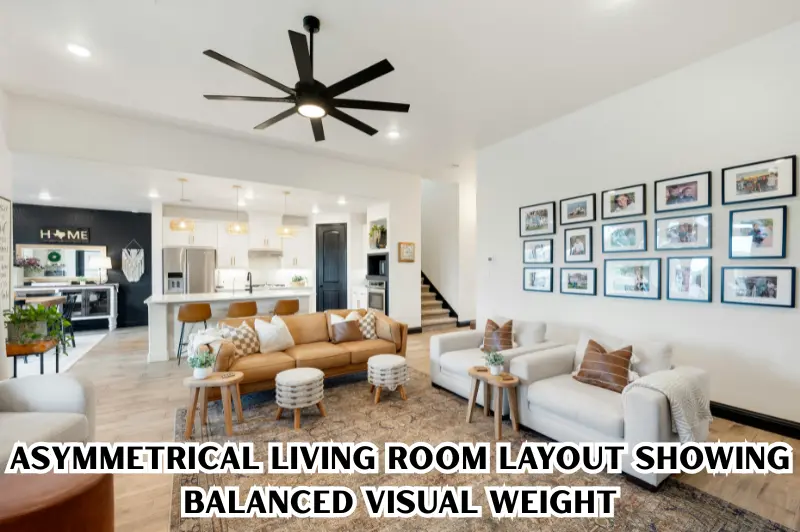
Asymmetrical balance distributes visual weight unevenly but still achieves equilibrium. For example, a large sofa on one side of a room can be balanced by two smaller chairs and a floor lamp on the other side.
This approach feels more relaxed, modern, and dynamic than symmetry. It is a popular choice in:
- Contemporary and eclectic interiors
- Open-concept living spaces
- Rooms with irregular architecture, such as angled walls or offset windows
Asymmetrical balance requires more skill because there is no simple mirroring formula. Designers rely on color, scale, and texture to make sure both sides of the room feel equally weighted.
3. Radial Balance
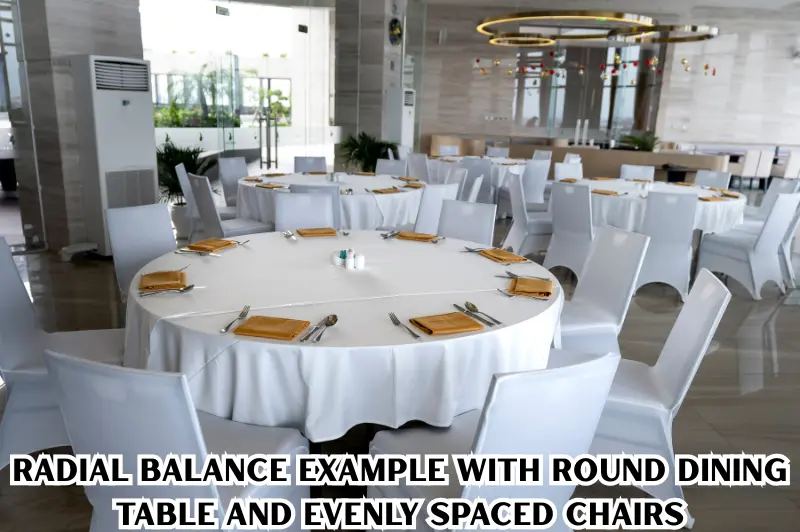
Radial balance arranges elements around a central focal point, similar to spokes on a wheel. A round dining table with chairs evenly spaced around it, or a rug with a circular pattern surrounded by furniture, are common examples.
Radial balance is less common as a whole-room strategy but works well for:
- Dining areas centered on a table
- Conversation nooks arranged around a fireplace or coffee table
- Statement light fixtures with furniture arranged beneath them
How to Achieve Balance in Interior Design (Step-by-Step)
Achieving balance starts with identifying the visual weight of every element in a room and then arranging them so no single area dominates. Here is a simple process to follow.
- Identify the focal point. Every balanced room needs one main feature, such as a fireplace, a large window, or a statement piece of furniture, that the rest of the layout supports.
- Assess visual weight. Consider color (dark colors feel heavier), size, texture (rough textures feel heavier than smooth ones), and pattern (busy patterns draw more attention).
- Choose a balance type. Decide whether the room calls for symmetry, asymmetry, or a radial layout based on the room’s function and existing architecture.
- Distribute large items first. Place major furniture pieces like sofas, beds, and dining tables before adding smaller accessories.
- Layer in smaller elements. Add lamps, artwork, plants, and decor to fill visual gaps and reinforce the balance you have created.
- Step back and evaluate. View the room from the doorway and from a seated position. Adjust anything that feels heavier on one side than the other.
Practical Examples of Balance in Real Rooms
Balance looks different depending on the room, but the underlying logic stays the same: even distribution of visual weight.
- Living room: A large sectional sofa on one wall can be balanced with a media console and a tall bookshelf on the opposite wall, rather than leaving that wall empty.
- Bedroom: Matching bedside tables and lamps create instant symmetrical balance, while a single oversized headboard can be balanced with two smaller wall sconces on either side.
- Home office: A heavy wooden desk on one side of the room can be offset by open shelving or a light-colored accent chair on the other.
- Kitchen: Upper cabinets that feel visually heavy can be balanced with lighter-colored lower cabinets or an open shelf that breaks up the mass.
Balance vs. Other Interior Design Principles
Balance is often confused with related design principles. The table below clarifies how it differs from proportion, harmony, and unity.
| Principle | What It Focuses On | Example |
| Balance | Even distribution of visual weight | Two chairs offsetting one large sofa |
| Proportion | The size relationship between objects and the space | A rug sized correctly for a room’s dimensions |
| Harmony | How well elements work together as a whole | A consistent color palette throughout a room |
| Unity | The sense that all elements belong to one cohesive design | Repeated materials or finishes across a space |
Understanding these differences helps you diagnose exactly what feels wrong in a room instead of guessing.
Common Mistakes to Avoid
Many balance issues come from a few repeated mistakes. Being aware of them makes it easier to fix a room that feels off.
- Pushing all furniture against the walls. This often leaves the center of the room feeling empty and unbalanced.
- Ignoring color weight. A single dark accent wall without any grounding elsewhere in the room can pull the eye too strongly in one direction.
- Overloading one side with decor. Stacking artwork, plants, and accessories on one wall while leaving the opposite side bare creates visual tension.
- Using mismatched scale. Pairing an oversized sofa with tiny, delicate side tables can make the smaller pieces disappear.
- Forgetting vertical balance. Balance is not only side to side; ceiling height, tall furniture, and low pieces also need to be considered together.
Tips for Maintaining Balance as Your Room Evolves
Balance is not a one-time task. As you add new furniture, art, or decor over time, it helps to periodically reassess the room.
- Introduce new pieces one at a time and evaluate the room’s balance before adding more.
- Use area rugs to visually anchor furniture groupings and prevent a “floating” feeling.
- Rely on odd-numbered groupings, such as three decorative objects, since they tend to look more naturally balanced than even numbers.
- Keep a mix of textures and finishes so no single material dominates the room’s visual weight.
If you want to explore this topic further, you can also read our guide on proportion and scale in interior design to understand how size relationships affect a room’s overall look. Pairing balance with choosing the right focal point will help you design spaces that feel both harmonious and intentional. For a broader perspective on design theory, resources like the American Society of Interior Designers (ASID) offer helpful insights into professional design principles.
Frequently Asked Questions
What is balance in interior design? Balance in interior design is the even distribution of visual weight across a room using furniture, color, texture, and pattern. It ensures no single area feels heavier or more dominant, creating a sense of stability and calm that makes the space feel intentional and comfortable to be in.
What are the three types of balance in design? The three main types are symmetrical, asymmetrical, and radial balance. Symmetrical balance mirrors elements on either side of a point, Balance in Interior Design, asymmetrical balance distributes uneven elements evenly, and radial balance arranges items around a central focal point, such as a table or light fixture.
How do you fix an unbalanced room? Start by identifying the room’s focal point, then assess the visual weight of your furniture and decor. Move heavier pieces apart, add smaller items to empty-feeling areas, Balance in Interior Design and use color or texture to offset dominant elements until the room feels evenly weighted from multiple viewpoints.
Is asymmetrical balance harder to achieve than symmetrical balance? Asymmetrical balance generally requires more experience because there is no exact mirroring formula to follow. It relies on judgment about color, Balance in Interior Design, scale, and texture to make uneven elements feel equally weighted, whereas symmetrical balance simply mirrors identical items on each side.
Can a small room still have good balance? Yes, balance is not dependent on room size. Even a small room can achieve balance by carefully distributing a few key pieces, using light colors to avoid visual heaviness, Balance in Interior Design and choosing furniture scaled appropriately to the space rather than adding more items.
Conclusion
Balance in interior design is what separates a room that feels calm and intentional from one that feels chaotic or lopsided, regardless of how expensive or stylish the individual furniture pieces are. By understanding symmetrical, asymmetrical, and radial balance, assessing visual weight, and avoiding common mistakes like pushing everything against the walls, you can create rooms that feel naturally harmonious.
The best next step is to walk into your own living room or bedroom right now and look at it with fresh eyes. Notice which side feels heavier, identify your focal point, and make one small adjustment today. Balance is built through small, thoughtful changes, not a complete redesign.